
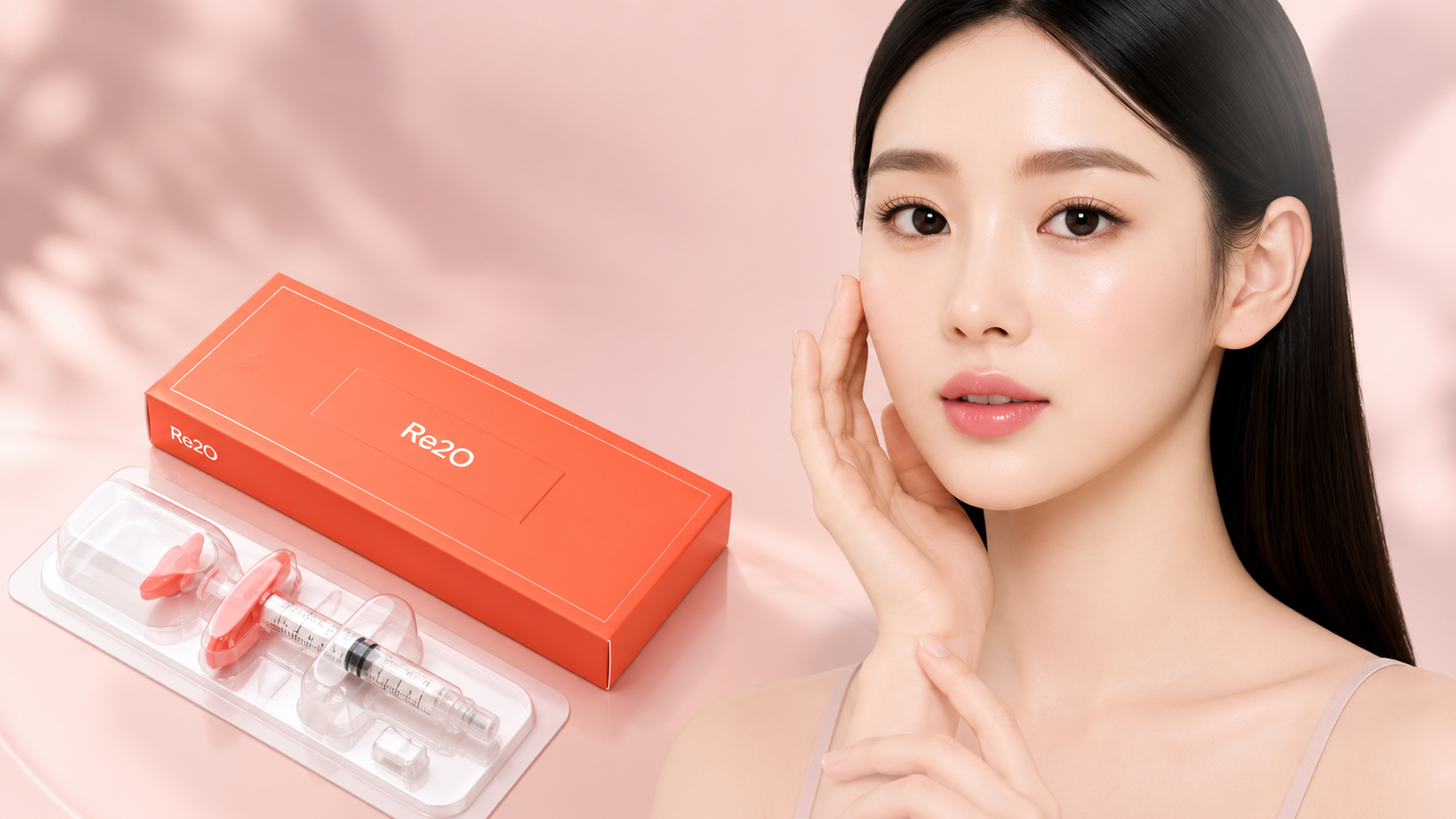
The world of Korean aesthetics continues to evolve beyond traditional hydration-focused skin boosters. One of the newer treatments attracting attention is Re2O, an injectable treatment based on human acellular dermal matrix (hADM) and the skin’s extracellular matrix, or ECM
Re2O Skin Booster is now available at Skin Institute Dermatology Center in Abu Dhabi, offering patients another option when the goal is to address overall skin quality, texture and elasticity.
At Skin Institute, treatment begins with professional assessment. Dr. Nawar Al Falasi, Consultant Dermatologist and founder of Skin Institute Dermatology Center, can assess the patient’s skin concerns and determine whether Re2O or another skin rejuvenation treatment is appropriate.
What Is Re2O Skin Booster?
Re2O is a Korean ECM-focused injectable skin booster based on human acellular dermal matrix, commonly abbreviated as hADM.
Unlike skin boosters that are primarily designed around hydration or a single active ingredient, Re2O is built around components of the extracellular matrix—the structural environment surrounding cells within the skin.
This makes Re2O different from many of the better-known skin boosters currently used in aesthetic dermatology.
What Is hADM?
hADM stands for human acellular dermal matrix.
The material originates from donated human dermal tissue. It undergoes processing designed to remove cellular components while preserving components of the extracellular matrix. These include structural elements such as collagen and elastin.
The word “acellular” is important: Re2O is not a stem-cell treatment containing living donor cells
Patients considering Re2O should be informed about its human-tissue origin as part of their consultation.
What Is ECM and Why Does It Matter for Skin?
ECM stands for extracellular matrix.
Think of the ECM as part of the skin’s supporting framework. It surrounds cells and contains structural components including collagen, elastin and proteoglycans that contribute to the organization and physical properties of skin tissue.
As skin ages, changes occur not only in collagen but also in the broader dermal environment.
This is where the concept behind Re2O differs from many conventional skin boosters: rather than focusing only on hydration, it uses hADM containing extracellular-matrix components.
How Is Re2O Different From Traditional Skin Boosters?
Not all skin boosters work in the same way.
Some treatments are primarily designed around hyaluronic acid and hydration. Others use substances such as polynucleotides or biostimulatory materials with different mechanisms.
Re2O belongs to a different category because its core material is human acellular dermal matrix.
In simple terms:
Traditional hydration booster → focuses primarily on hydration
Polynucleotide treatment → provides biological signals associated with tissue repair
Re2O → provides ECM structural material through hADM
This doesn’t mean one treatment is automatically better than another. They address skin quality through different approaches, and the appropriate option depends on the patient’s individual skin concerns.
What Can Re2O Help With?
Re2O may be considered when the treatment objective is improving overall skin quality and dermal support.
Depending on the patient’s condition and clinical assessment, discussions around Re2O may include concerns such as:
- Reduced skin elasticity
- Fine lines
- Rough or uneven skin texture
- Reduced firmness
- Changes in skin density and resilience
- Age-related changes in skin quality
Korean clinical sources commonly position Re2O around improvements in texture, firmness, elasticity and overall skin quality, although individual responses vary.
A consultation is necessary to determine whether these concerns are suitable for Re2O or would be better addressed using another treatment.
Is Re2O a Filler?
No. Re2O should not be considered a conventional dermal filler.
Dermal fillers are typically selected when the treatment objective involves restoring or creating facial volume, contour or projection.
Re2O is instead positioned as an ECM skin-quality treatment. Its purpose is not simply to create conventional filler-like volume.
This distinction matters because a patient experiencing skin-quality changes may require a very different treatment from someone seeking correction of significant volume loss.
Re2O vs Rejuran: What Is the Difference?
This is likely to become one of the most common questions about Re2O.
Both treatments are discussed in the context of improving skin quality, but their composition is fundamentally different.
Rejuran is a polynucleotide-based injectable treatment.
Re2O, on the other hand, uses human acellular dermal matrix containing extracellular-matrix components.
Therefore, the question shouldn’t simply be:
“Is Re2O better than Rejuran?”
A better question is:
“Which treatment is more appropriate for my skin concern?”
The answer depends on factors including skin quality, age-related changes, treatment goals, previous procedures and medical suitability.
A dermatologist can assess these factors before recommending an appropriate treatment.
Re2O vs Hyaluronic Acid Skin Boosters
Hyaluronic acid skin boosters are generally used to improve skin hydration and related skin-quality concerns.
Re2O has a different treatment concept because it is based on hADM and extracellular-matrix components, rather than relying primarily on hyaluronic acid for hydration.
Neither category should automatically be considered superior.
For a patient primarily concerned with dehydration, one approach may be appropriate. For someone with changes in texture, elasticity or dermal quality, the dermatologist may consider a different strategy.
Which Areas Can Be Treated With Re2O?
Re2O has been described by clinics using the treatment for areas of the face where changes in skin quality, texture and elasticity are a concern.
Treatment areas may include the:
Forehead, eye area, cheeks, smile-line area, jawline and other selected facial areas. Some providers also describe use on areas such as the neck and hands.
However, treatment areas should be determined individually after assessment rather than assuming every area is suitable for injection.
Who May Be Suitable for Re2O?
A patient may want to discuss Re2O with a dermatologist if their primary concerns include:
Fine lines, reduced elasticity, changes in skin texture, reduced firmness or an overall decline in skin quality.
However, being interested in Re2O does not automatically mean the treatment is suitable.
Medical history, previous procedures, current skin condition, treatment area and individual goals should all be reviewed before treatment.
Who May Not Be Suitable for Re2O?
Because Re2O is an injectable treatment using a human-tissue-derived material, suitability should be determined by a qualified medical professional.
Patients should disclose their complete medical history, medications, allergies, previous aesthetic procedures and any active skin problems during consultation.
The treating physician can then determine whether treatment should proceed, be postponed or whether another option would be more appropriate.
Does Re2O Add Facial Volume?
Re2O is not intended to replace conventional dermal filler when significant facial volume or structural contouring is required.
Its treatment concept centers on the dermal environment and skin quality rather than traditional volumization.
Patients who are unsure whether they need a skin booster, filler or another rejuvenation procedure should first undergo facial and skin assessment.
How Many Re2O Sessions Are Needed?
There is no single treatment schedule appropriate for every patient.
The number of sessions should be determined according to factors such as:
Skin condition → treatment area → individual goals → previous treatments → clinical response.
Your dermatologist can recommend an individualized treatment plan after assessment.
When Will I See Results From Re2O?
Re2O should not be presented as an instant transformation.
Changes in skin quality may develop progressively, and individual results can vary. Current clinical commentary around Re2O describes results developing over the weeks following treatment
The expected timeline should therefore be discussed during consultation based on the patient’s skin and treatment plan.
Is There Downtime After Re2O?
Because Re2O is administered through injections, temporary injection-site reactions can occur.
These may include redness, swelling, tenderness or bruising.
The extent and duration vary between individuals. Patients should follow the aftercare instructions provided by their treating clinician and contact the clinic if they experience an unexpected reaction.
Re2O Skin Booster at Skin Institute Abu Dhabi
For patients searching for Re2O Skin Booster in Abu Dhabi, the treatment is now available at Skin Institute Dermatology Center, Abu Dhabi.
Skin Institute combines medical dermatology with aesthetic treatments and advanced technologies, with treatment plans based on individual assessment rather than a one-treatment-fits-all approach.
This is especially important with newer treatments such as Re2O. Understanding what the treatment contains, what it is designed to address and whether it is appropriate for the patient’s skin should come before deciding to proceed.
Re2O Consultation With Dr. Nawar Al Falasi
Dr. Nawar Al Falasi is a Consultant Dermatologist and founder of Skin Institute Dermatology Center.
For patients interested in Re2O, consultation provides an opportunity to assess:
Skin quality and elasticity
Fine lines and texture
The areas causing concern
Previous injectable or aesthetic treatments
Whether Re2O is appropriate
Whether another skin booster or treatment may be more suitable
The objective is not simply to choose the newest treatment.
It is to choose the right treatment for the patient’s skin.
Frequently Asked Questions About Re2O Skin Booster
What is Re2O?
Re2O is an injectable skin booster based on human acellular dermal matrix (hADM). The material retains extracellular-matrix components such as collagen and elastin after cellular components are removed during processing.
Where is Re2O from?
Re2O is a South Korean skin-booster treatment. Current Korean clinical sources identify it as an hADM/ECM-based injectable.
What does Re2O contain?
Its core material is human acellular dermal matrix, containing components of the extracellular matrix such as collagen, elastin and other structural proteins/proteoglycans.
Is Re2O made from human tissue?
Yes. The hADM used in Re2O is derived from donated human dermal tissue that undergoes processing to remove cellular components while retaining the extracellular matrix. Patients should be informed of this origin before treatment.
Is Re2O a stem-cell treatment?
No. hADM is acellular; it does not mean living donor stem cells are being injected.
Is Re2O a filler?
Re2O is an ECM skin booster, not a conventional volumizing dermal filler.
What is Re2O used for?
Re2O is used as a skin-quality treatment and may be considered for concerns involving texture, elasticity, firmness, fine lines and overall dermal quality, depending on individual assessment.
Is Re2O better than Rejuran?
Neither treatment is universally better. Rejuran is polynucleotide-based, whereas Re2O uses hADM/ECM material. The appropriate option depends on the patient’s skin condition and treatment goals.
Where can I get Re2O Skin Booster in Abu Dhabi?
Re2O Skin Booster is available at Skin Institute Dermatology Center in Abu Dhabi. Patients can book a consultation to determine whether the treatment is appropriate for their skin.
Can I consult Dr. Nawar Al Falasi about Re2O?
Yes. Dr. Nawar Al Falasi, Consultant Dermatologist and founder of Skin Institute Dermatology Center, can assess skin concerns and advise whether Re2O or another treatment approach is appropriate.
Discover Re2O at Skin Institute Abu Dhabi
If you are looking for a Korean skin booster in Abu Dhabi and are interested in a treatment focused on skin quality, elasticity and the extracellular matrix, Re2O may be an option to discuss with your dermatologist.
Book a consultation at Skin Institute Dermatology Center Abu Dhabi to learn more about Re2O and determine whether it is appropriate for your skin.
Individual suitability, treatment plans and results vary. A medical consultation is required before treatment.